Michael Olise and What France's World Cup 2026 Attack Now Looks Like
·
Why the Bayern forward has moved from option to expectation
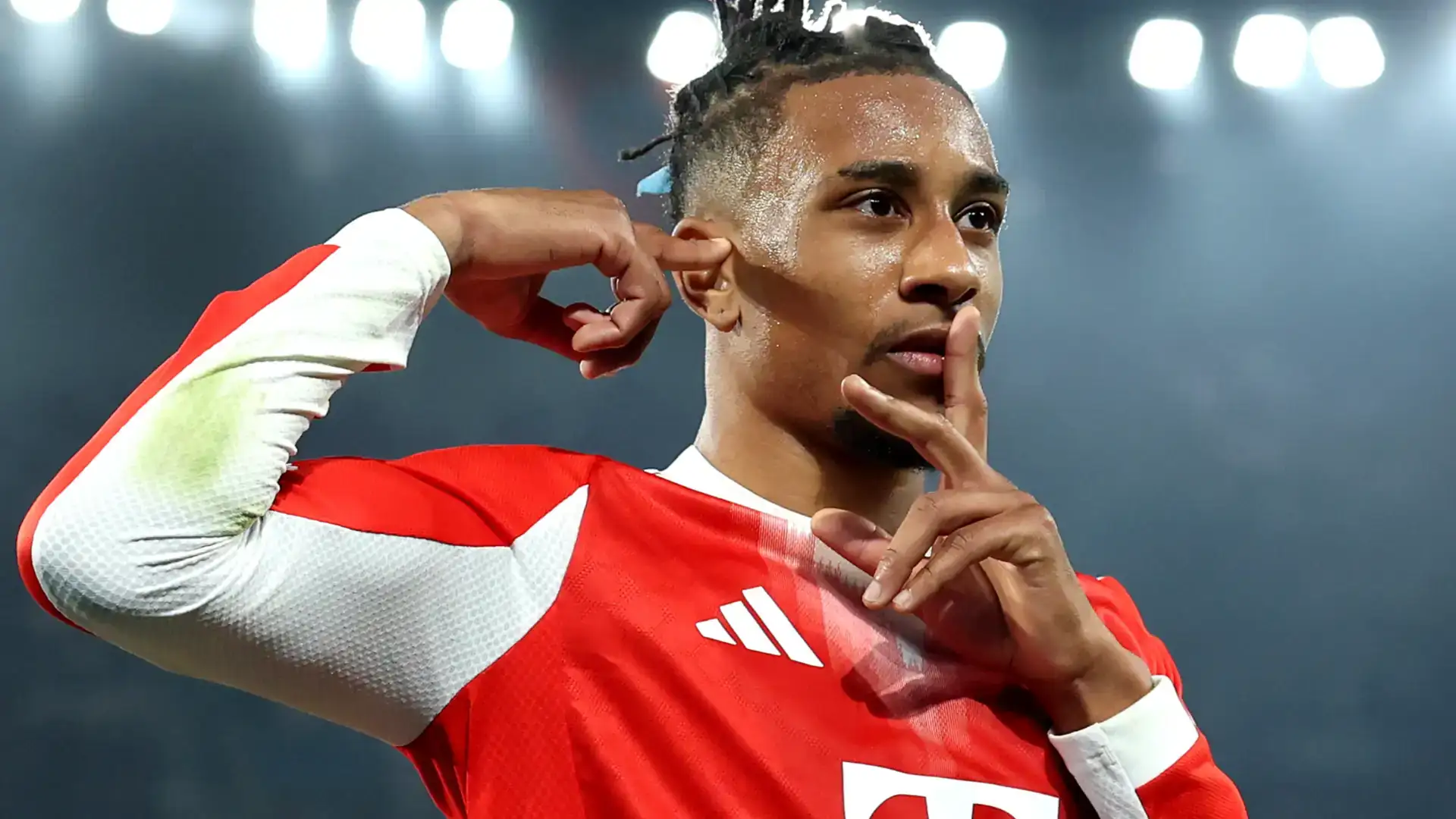
Michael Olise, born December 12 2001, is 23 years old and plays right wing for Bayern Munich — delivering 15 goals and 19 assists in the Bundesliga in 2025-26 to secure his place as one of France's key attacking threats at the 2026 World Cup. His 2025-26 season at Bayern Munich settled the first debate completely: 5 goals and 8 assists in 13 Champions League appearances on top of those Bundesliga numbers, and a place in France's starting plans that has grown progressively less debatable with each international window. At 23, Michael Olise arrives at his first World Cup not as an emerging talent on the fringe but as one of the most consistently productive right-sided players in European football this season.
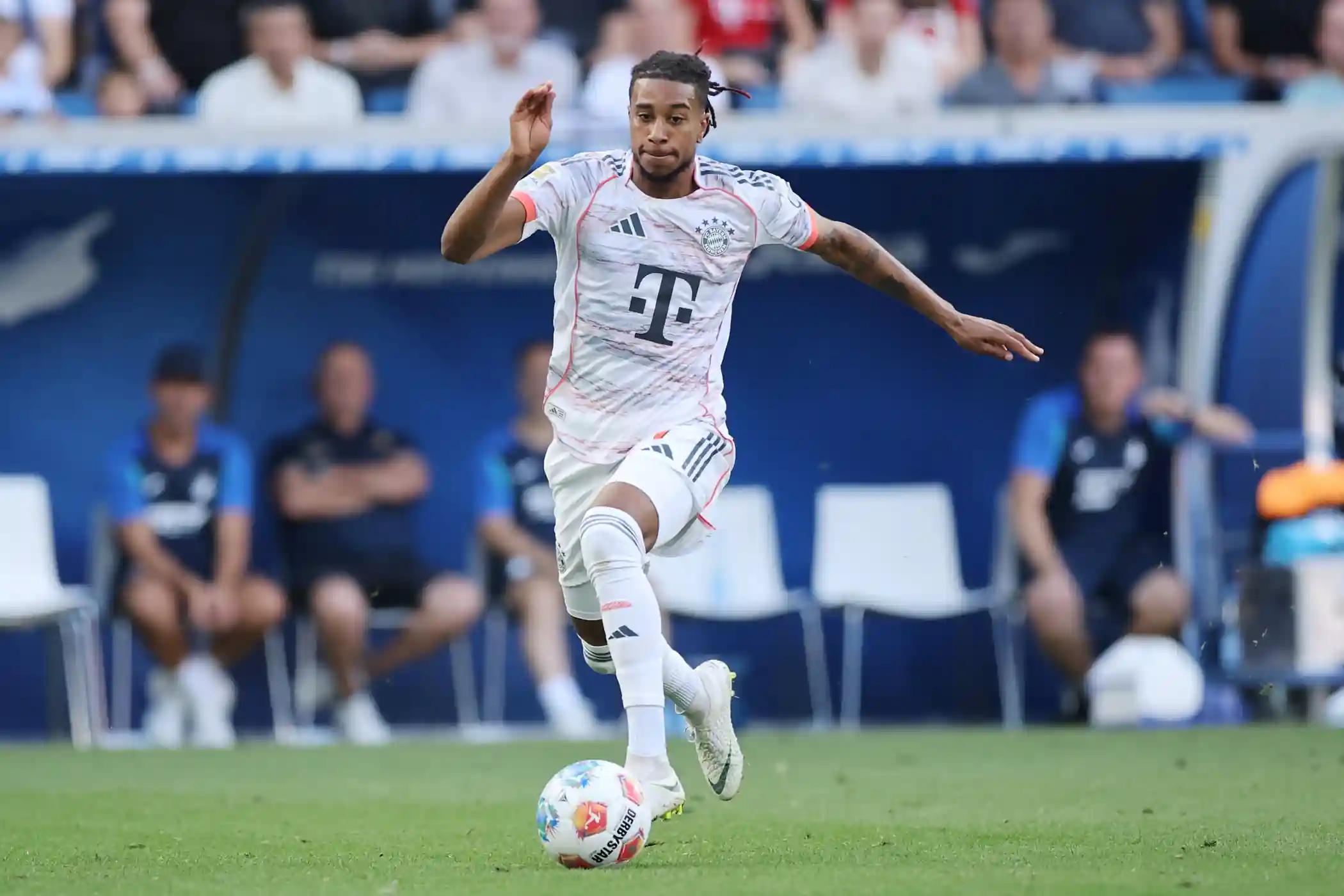
What makes Michael Olise difficult to defend is the combination of his natural foot and his position. He is predominantly left-footed but operates from the right side, which means he consistently cuts inside toward his stronger foot rather than hugging the touchline. That movement pulls him into the half-spaces between an opponent's fullback and central midfielder — zones where he can either drive at defenders or play through passes that wide players rarely attempt. Under Vincent Kompany at Bayern, that movement has been given clear tactical structure, with Olise trusted to read situations and find solutions rather than follow a rigid pattern. For Didier Deschamps, the same flexibility has made him deployable in both a 4-2-3-1 as a right attacking midfielder and in a wider 4-3-3 shape, and that ability to fit either system matters in a 48-team tournament where different opponents demand different structures across a longer schedule.
France's World Cup planning has had to work around uncertainty regarding Kylian Mbappé's availability and fitness, and that uncertainty has raised the stakes on Michael Olise's contribution. When Mbappé is operating at full capacity, Olise offers the width and off-ball movement that prevents teams from loading their defensive shape onto one side. When Mbappé's role is reduced, Olise steps into more central responsibility, which he has handled repeatedly for Bayern this season. Either scenario gives him meaningful minutes rather than late appearances, and his track record of 13 France caps combined with the experience of a 2024 Olympics silver medal means the pressure of a major tournament is ground he has already covered.
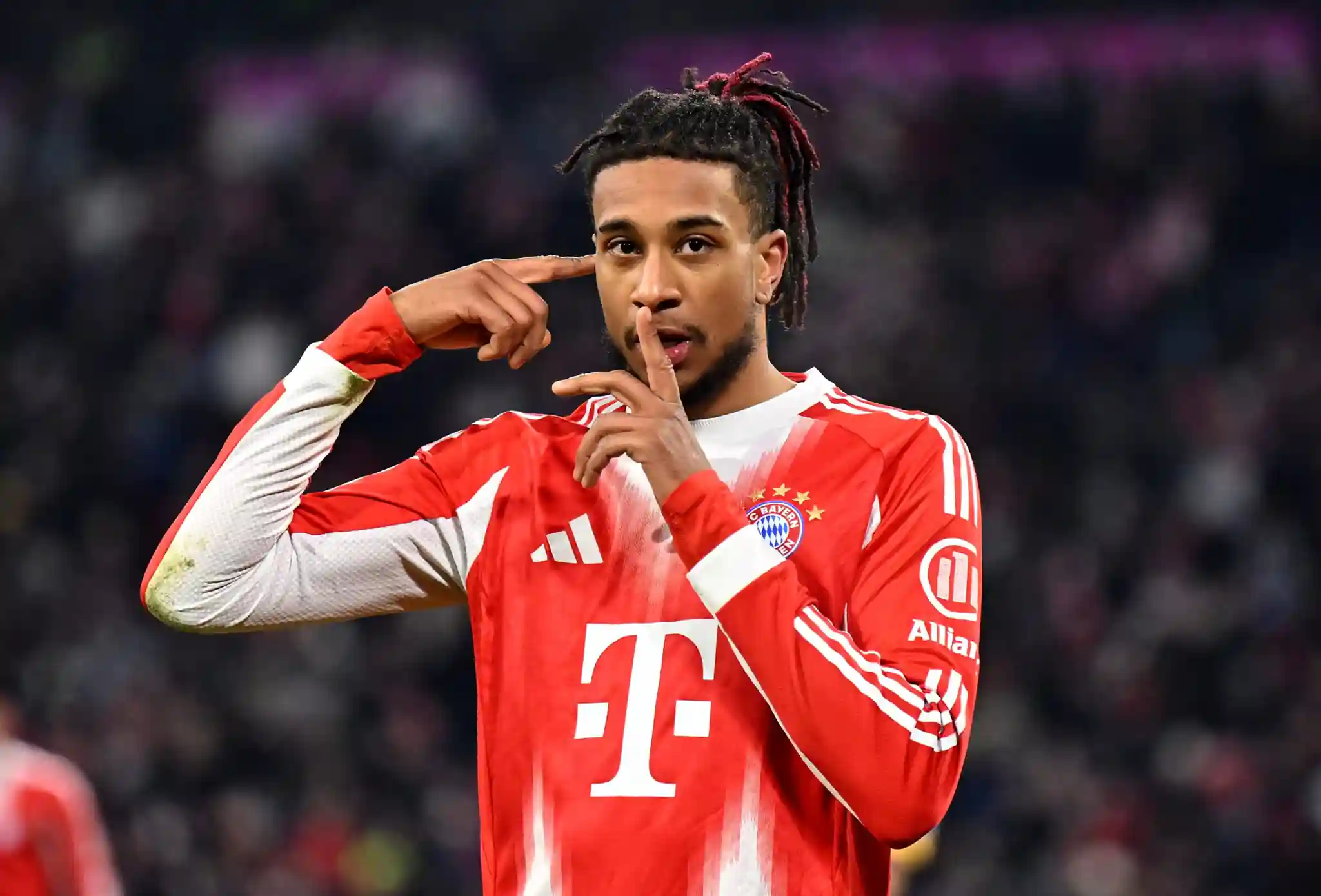
France arrive at the 2026 World Cup with attacking depth that most squads cannot match. Ousmane Dembélé, Antoine Griezmann, and a generation of younger forwards create competition that would limit many players to rotation roles. Michael Olise has moved past that competition on the basis of sustained output rather than single performances. His 2025-26 Bundesliga season saw him lead Bayern's assist chart by five over his nearest teammate, and his Champions League contributions helped carry the club to the semi-finals. That kind of production across a full European season is the argument that earns a coach's trust in tournament football, where reliability over weeks matters more than occasional brilliance.
The most instructive thing to track during France's group stage will be Olise's role from the first whistle. If he starts regularly, it signals that Deschamps views him as a guaranteed contributor rather than a bench option. If he is used as an impact substitute, his ability to change matches inside twenty minutes — demonstrated consistently for Bayern — becomes France's most reliable late weapon. Either interpretation leaves Michael Olise in a position where the 2026 World Cup is the stage that completes the transition from a player European football already knows to a name the rest of the world learns during six weeks in North America.
Why does Michael Olise play for France and not England?
Born on 12 December 2001 in Hammersmith, London and raised in Hayes, Michael Olise was eligible to represent four different nations at senior level: England by birth, France and Algeria through his French-Algerian mother, and Nigeria through his British-Nigerian father. That four-way eligibility made him one of the most sought-after uncommitted talents in European football before he committed to France in 2024 — and the explanation for his choice leads directly back to his mother. She is French-Algerian, and Olise has cited her heritage and the connection she maintained with France throughout his childhood as the reason the pull toward Les Bleus was always stronger than the alternatives. "My mother is from France," he said after his first senior call-up in August 2024. "When I was little, I came here. I had this connection with France." He also described his multicultural identity directly: "I actually come from four countries: France, Algeria, Nigeria and England. I consider myself very lucky to possess these four parts, which all enrich me." The choice of France was personal before it was strategic.
England's failure to secure Olise's commitment is one of the more significant misses of recent international recruitment cycles. He developed through English academies — Arsenal, Chelsea and Manchester City as a young player, Reading at development level — before Crystal Palace signed him in July 2021 after activating his £8.37 million release clause. His Premier League form at Palace drew attention from the largest clubs in Europe, and Bayern Munich signed him in July 2024 on a five-year contract. Yet the geographical fact of growing up in London never outweighed the emotional pull of his mother's background, and France moved first. Didier Deschamps called him up to the senior squad for the first time on 29 August 2024, and Olise was unambiguous about where his allegiance had always pointed: "I have always had a connection with the France national team. It has been my dream since I was a kid to play in the French team." At 23, he is preparing to play at a World Cup for the nation he chose.
Does Michael Olise speak French?
The short answer is: not fluently — and the longer answer became briefly famous in French football circles in 2024. Olise was born and raised in England, attended English schools and progressed through English academies from childhood. English is his first language, and while his French-Algerian mother spoke French within the family context, it was not the dominant language of his upbringing. The gap between heritage and fluency became public at the UNFP Awards ceremony in France, when Olise was asked to respond in French after collecting the prize for best French player playing abroad. He attempted to speak, stumbled, let slip "Oh putin…" and asked in English, "Are we live?!" — a moment that spread quickly across social media, with France teammate Rayan Cherki among those who reacted publicly. The clip was more endearing than embarrassing; it illustrated honestly the position Olise occupies as someone who is culturally connected to France through his mother but linguistically rooted in England through his upbringing.
Since joining Bayern Munich in July 2024 and integrating into the France senior setup, Olise has been taking formal French lessons. Progress has been visible: by early 2025 he completed part of a France press conference in French, getting his points across clearly enough to satisfy the room even if imperfectly. In shorter post-match interviews he typically defaults to English to avoid misunderstandings, which reflects careful communication rather than a lack of effort. The situation is consistent with his broader profile — a player who holds four nationalities across three continents, grew up in one country, works in another, and carries cultural roots that do not resolve into a single identity. It has no bearing on his football: Olise communicates on the pitch through movement and decision-making at a level that requires no translation, and the France squad functions in an environment where managing multiple languages and cultures simultaneously is entirely routine.
Mbappé's hamstring injury and what it means for Olise's tournament responsibility
The uncertainty around Kylian Mbappé moved from theoretical to real in late April 2026, when he suffered a semitendinosus hamstring injury in his left leg during the final weeks of Real Madrid's club season. With the World Cup opening on June 11, France's medical staff has approximately five weeks to assess his recovery. Mbappé remained in France's 26-man squad, but his capacity to start the group stage at full intensity carries genuine doubt. For Michael Olise, that scenario is already familiar ground: his 2025-26 Bayern season repeatedly required him to function as the decisive contributor in matches where the headline pressure fell squarely on him, and the results were consistent. Bayern won the Bundesliga title this season, and Olise's combined return of 22 goals and 30 assists across all competitions — including 15 goals and 19 assists in the Bundesliga alone, leading his nearest rival in the assist chart by five — was central to that success. The experience of delivering when it matters across a full season is precisely what earns a coach's trust going into a tournament.
Deschamps has publicly stated his desire to find a system that gets both Olise and Ousmane Dembélé into the starting XI simultaneously rather than treating one as a rotation option behind the other. Both players do their best work cutting inside from wide positions, which creates tension in system design but which Olise has shown he can resolve. At Bayern, he regularly shifted to a more interior role when the wide channel was occupied, maintaining effectiveness while freeing space for teammates. That adaptability makes him usable in multiple configurations of whatever structure Deschamps selects for each opponent — and in a 48-team World Cup where France can face very different defensive setups across a potentially long run, that flexibility has concrete value.
France's Group I draw and why Olise's precision matters from the first match
France are drawn in Group I alongside Senegal, Iraq, and Norway. The opener against Senegal on June 16 is the group's most competitive match on paper — a side with the physical intensity and defensive organisation to make wide forwards work hard for every touch in dangerous areas. If Olise starts that fixture, it is France's clearest signal of his role in the starting structure rather than as a rotating option. The second group game against Iraq on June 22 offers France a more expansive canvas, and those open-space conditions are where Olise's combination of direct running and precision in the final third produces his clearest output. Norway close the group on June 26; Erling Haaland's presence on the other side means goal difference carries real weight for both sides regardless of the standings.
Michael Olise at the 2026 World Cup — what to expect
A 23-year-old preparing for his first World Cup with a Bundesliga title, a Champions League semi-final run and 22 combined goals and assists in his first full season at Bayern behind him, Olise enters the tournament with the production record to justify a central role in France's plans rather than a fringe one. The 2026 format, with 48 nations and an expanded bracket, gives deeper runs more matches to navigate across a longer schedule — and France will need width, creativity and goals from positions beyond their central spine throughout. Olise is the clearest candidate to supply all three consistently. Six weeks of tournament football across North American venues will give him more exposure on the world stage than any previous international window. His campaign begins on 16 June against Senegal. By the time France's run ends, the question of whether Michael Olise belongs among the world's best attacking players should no longer require a debate.
FAQ
Why does Michael Olise play for France and not England?
Olise chose France because his mother is French-Algerian. As he explained: "My mother is from France. When I was little, I came here. I had this connection with France." He was eligible to represent France, England, Nigeria and Algeria but chose France as it had been his dream since childhood.
What club does Michael Olise play for?
Michael Olise plays for Bayern Munich in the Bundesliga. He joined from Crystal Palace in the summer of 2024 and delivered 15 goals and 19 assists in the Bundesliga during the 2025-26 season.
Does Michael Olise speak French?
Yes. Despite being born in London, Olise speaks French — a connection maintained through his Franco-Algerian mother and regular visits to France during his childhood. This language fluency was a factor in his smooth integration into the French national team environment.
What group is France in at the 2026 World Cup?
France are in Group I at the 2026 World Cup, facing Senegal, Norway and Iraq.
Where was Michael Olise born?
Michael Olise was born on December 12 2001 in Hammersmith, London. He progressed through the academies at several English clubs, including Manchester City, before establishing himself at Reading, Crystal Palace and ultimately Bayern Munich.