World Cup 2030 Schedule, Hosts, Teams and Cities
World Cup 2030 · Global
·
When and where is the 2030 World Cup?
The 2030 FIFA World Cup will be hosted by six nations — Spain, Portugal and Morocco as primary hosts, with centenary celebration matches in Argentina, Paraguay and Uruguay — marking exactly 100 years since Uruguay staged the first edition in 1930. FIFA formally appointed Morocco, Portugal and Spain as the main hosts in December 2024, while Argentina, Paraguay and Uruguay were awarded one centenary celebration match each. That means the competition is being framed not only as the next World Cup, but as a 100-year bridge back to the first edition in 1930. Before a ball is kicked, the event already has a narrative that is larger than one summer or one country.
Quick answer: World Cup 2030 will be centred in Spain, Portugal and Morocco, with one centenary match each in Uruguay, Argentina and Paraguay. The tournament keeps the 48-team format and is scheduled for summer 2030.
Where Is the 2030 World Cup?
The 2030 World Cup is hosted primarily across three countries in two continents: Morocco in Africa, and Portugal and Spain in Europe. These three nations form the main body of the tournament and will stage the vast majority of the 104 matches across 48 teams. In addition, three South American nations — Argentina, Paraguay and Uruguay — will each host one centenary celebration match to mark the 100th anniversary of the competition's first edition in 1930.
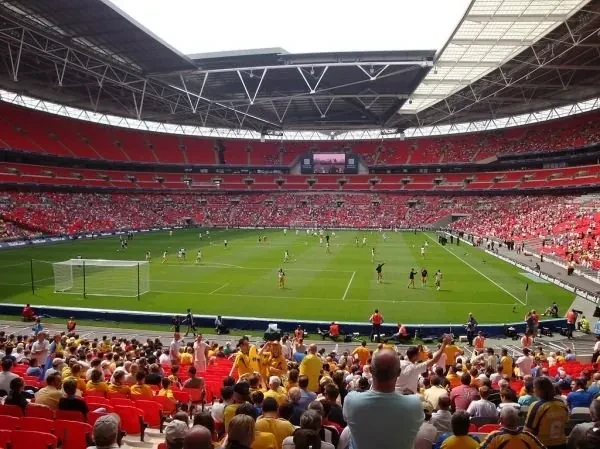
Spain contributes the largest number of venues, with eleven stadiums across the country. The Santiago Bernabéu in Madrid and Camp Nou in Barcelona are the headline venues, joined by La Cartuja in Seville, San Mamés in Bilbao and stadiums in Gijón, La Coruña, Las Palmas, Málaga, Murcia, San Sebastián and Zaragoza. Portugal provides three stadiums: the Estádio da Luz and Estádio José Alvalade in Lisbon, and Estádio do Dragão in Porto. Morocco's contribution centres on the Hassan II Stadium in Casablanca — a newly constructed ground planned to hold 115,000 spectators, which would make it the largest stadium at the entire tournament and one of the biggest football venues ever built — alongside five other Moroccan stadiums including an expanded Adrar Stadium in Agadir.
The centenary matches in South America will be played at Estadio Centenario in Montevideo, Uruguay; Estadio Monumental in Buenos Aires, Argentina; and Estadio General Pablo Rojas in Asunción, Paraguay. These fixtures open the tournament before the main competition moves to Europe and Africa, creating a geographical sweep across three continents that no World Cup has attempted before.
The 1930 Centenary: Why Uruguay and South America Open the Story
The first FIFA World Cup took place in Uruguay from 13 to 30 July 1930. Thirteen nations participated — seven from South America, four from Europe and two from North America — with the host country selected by FIFA partly because Uruguay was celebrating the centenary of its own constitution that year and had won consecutive Olympic football gold medals in 1924 and 1928. The final, played at the Estadio Centenario in Montevideo before a crowd of 68,346, ended with Uruguay defeating Argentina 4-2 to become the inaugural world champions.
Exactly one hundred years later, that same stadium will host one of the opening centenary matches of the 2030 edition. The symmetry is deliberate and unusually complete: the venue where the competition was born will be part of the tournament that marks its hundredth year. For Argentina, Paraguay and Uruguay, the centenary fixtures represent a recognition of South America's foundational role in the sport's global history rather than a full co-hosting arrangement — the logistical and commercial weight of the tournament sits with Spain, Portugal and Morocco, but the symbolic opening belongs to the continent where it all started.
Why the Six-Country Plan Changes the Tournament's Character
The obvious point is scale. FIFA's official 2030 overview describes a tournament connecting three continents and six countries, with the main hosts carrying the sporting weight and South America providing the historical framing. That structure changes how supporters will think about travel, identity and tournament atmosphere. World Cup 2030 is likely to feel less like a single national showcase and more like a football relay across generations — Montevideo honouring where the competition began, with Madrid, Lisbon and Moroccan host cities carrying the month-long modern weight of the competition.
One practical consequence of the six-host arrangement is that all six nations qualify automatically for the tournament. That changes the qualification picture for UEFA, CAF and CONMEBOL immediately: Spain, Portugal, Morocco, Argentina, Paraguay and Uruguay no longer compete for their confederation's regular qualifying spots. Other nations have those paths slightly widened as a result, which adds a strategic layer to the qualifying rounds that will run from 2027 through early 2030.
Why FIFA International Windows Now Feel Like Early Chapters
The other key layer is time. FIFA approved the men's international match calendar through 2030 with recurring windows in March, June, September or October, and November. Those windows are where the 2030 story will steadily take shape — through qualifiers, tactical experiments and the first real signals about which teams can manage the travel and physical demands of a modern multi-continent World Cup cycle. Because 2030 already spans multiple host cultures and requires long-haul supporter planning, each FIFA window from 2027 onward carries more narrative weight than a typical qualifying campaign.
That is what makes this edition feel unusually significant even at this distance. It is a centenary World Cup, a six-nation production and a tournament whose tone will be shaped over dozens of FIFA windows long before the opening whistle. Most World Cups are sold on novelty or the host nation's identity. World Cup 2030 can be sold on memory, geographic reach and a hundred years of the sport's defining competition — all at once.
FAQ
Which countries will host the 2030 World Cup?
The 2030 FIFA World Cup will be hosted by six nations. Spain, Portugal and Morocco are the primary co-hosts, while Argentina, Paraguay and Uruguay will each host one centenary celebration match, marking 100 years since Uruguay staged the first World Cup in 1930.
Why is Uruguay hosting a 2030 World Cup match?
Uruguay hosted the first-ever FIFA World Cup in 1930, winning the tournament by defeating Argentina 4–2 in the final at the Estadio Centenario in Montevideo. The centenary celebration match in Uruguay honours this founding moment in World Cup history.
How many teams will play at the 2030 World Cup?
The 2030 FIFA World Cup will feature 48 teams — the same expanded format introduced for the 2026 tournament.
What is the Hassan II Stadium?
The Hassan II Stadium is a new stadium under construction in Casablanca, Morocco, with a planned capacity of 115,000, which would make it one of the largest football stadiums in the world when completed. It is set to be one of the main venues for the 2030 World Cup.
When will the 2030 World Cup take place?
The 2030 FIFA World Cup is scheduled for the summer of 2030. FIFA appointed Spain, Portugal and Morocco as primary hosts in December 2024, with Argentina, Paraguay and Uruguay confirmed for centenary matches.